
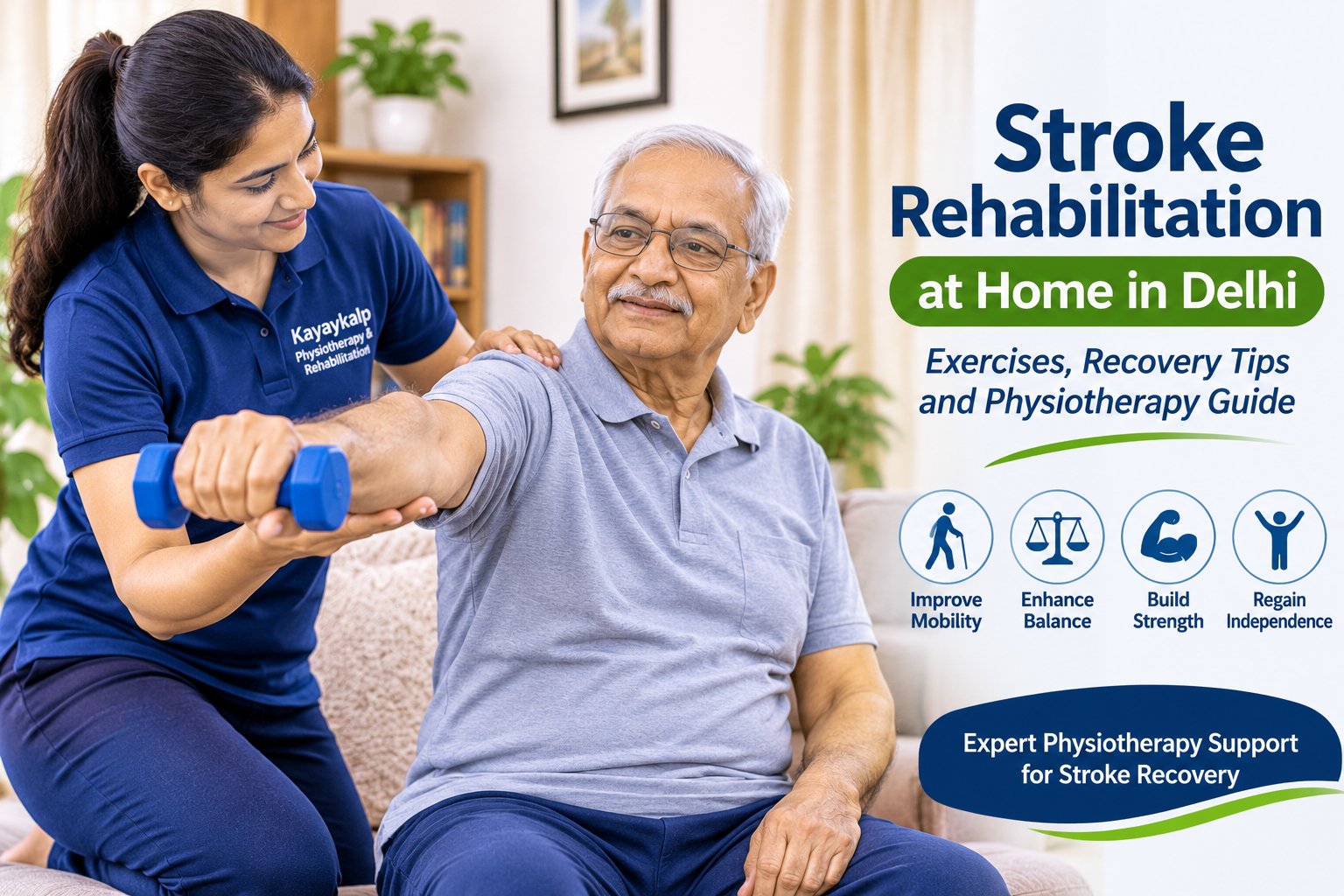
A stroke can change life suddenly, affecting how a person walks, speaks, uses their arm or manages everyday tasks. The good news is that the brain has an ability to adapt, and with regular, guided rehabilitation, many stroke survivors regain movement, confidence and independence. Recovery takes patience, and it is rarely a straight line.
In this guide, we explain how home-based stroke physiotherapy works, the kinds of exercises commonly used, how caregivers can help safely, and when to seek urgent medical attention.
Why stroke rehabilitation matters
A stroke happens when blood supply to part of the brain is interrupted. Depending on the area affected, a person may develop weakness or paralysis on one side, balance problems, stiffness, difficulty walking, reduced hand function or trouble with daily activities.
The brain can form new connections through repeated, meaningful practice, a process called neuroplasticity. Physiotherapy uses this by guiding the patient through safe, structured movement. Recovery speed varies widely and depends on the type and severity of the stroke, age, other health conditions and how consistently rehabilitation is followed.
Know the warning signs: act FAST
A stroke is a medical emergency. If you notice any of these signs, call an ambulance or go to the nearest hospital immediately (in India, dial 112 or 108):
- F - Face: one side of the face drooping
- A - Arm: weakness or numbness in one arm
- S - Speech: slurred or confused speech
- T - Time: time to act immediately; do not wait for symptoms to pass
Sudden severe headache, loss of vision, dizziness or loss of balance can also be signs of a stroke.
When can physiotherapy start?
Rehabilitation often begins in the hospital once the patient is medically stable, and the treating doctor decides the timing. Continuing rehabilitation after discharge is important, because progress often depends on regular practice over weeks and months. Always get your doctor's clearance before starting a home exercise programme, especially if there is high blood pressure, heart disease, diabetes or a risk of falls.
How home-based stroke physiotherapy helps
Practising in the place where daily life happens has real advantages:
- Familiar surroundings: the patient practises getting out of their own bed, using their own bathroom and climbing their own stairs.
- No tiring travel: hospital trips can be exhausting and difficult for someone with limited mobility.
- Family involvement: caregivers learn the correct way to assist, which protects both the patient and the caregiver.
- Practical advice: the physiotherapist can suggest changes to the home, such as removing loose rugs, adding grab bars or rearranging furniture.
- Consistency: regular visits help build routine, which is key to recovery.
What does a stroke physiotherapy plan include?
After a thorough assessment of strength, tone, balance, walking, sensation and daily activities, a physiotherapist designs a personal plan. This may include:
- Bed mobility and transfers: safely rolling, sitting up, moving from bed to chair and standing
- Strengthening: targeted exercises for weak arm and leg muscles
- Balance training: sitting balance first, then standing and walking balance
- Gait training: relearning to walk, with or without a walking aid
- Stretching and positioning: to manage stiffness and prevent tight joints
- Arm and hand rehabilitation: task-based practice such as reaching, holding and releasing objects
- Fall prevention: teaching safe movement and home adjustments
- Daily activity practice: dressing, eating, toileting and other everyday tasks
Simple exercises commonly used in stroke rehabilitation
Important: these are examples only. The right exercises depend on the person's condition, so please have a physiotherapist review them before starting. Stop and seek help if the patient feels dizzy, short of breath, has chest pain or a sudden new headache, or if pain increases.
- Assisted arm raises: the caregiver gently supports the weak arm while the patient lifts it forward, keeping movements slow and pain-free.
- Bridging: lying on the back with knees bent, the patient lifts the hips slightly and lowers again to strengthen the hips and legs.
- Sit-to-stand practice: from a sturdy chair, the patient practises standing up and sitting down slowly with supervision.
- Weight shifting: while seated or standing with support, shifting weight gently from side to side to improve balance.
- Hand and finger exercises: squeezing a soft ball, picking up light objects or opening and closing the hand.
- Supported walking: short, frequent walks with a caregiver or walking aid, as advised by the physiotherapist.
Shorter sessions done often are usually better than one long, tiring session.
Tips for caregivers
Caring for a stroke survivor is rewarding but demanding. These habits help:
- Never pull the weak arm. Pulling on the affected shoulder can cause pain or injury. Support the arm and move the person from the trunk or stronger side as taught by the therapist.
- Encourage, but do not rush. Allow the patient to do what they can on their own, and step in only when needed.
- Prevent falls. Keep floors dry and clear, use non-slip footwear, ensure good lighting and keep frequently used items within reach.
- Position the weak side carefully in bed and in a chair, with the arm supported on a pillow.
- Change position regularly for those who spend long hours in bed, to protect the skin.
- Be patient with speech and memory changes, and speak calmly and clearly.
- Follow the doctor's medicine and check-up plan, including blood pressure and sugar control.
- Look after yourself. Share duties with family, rest when you can and ask for help early.
Practical recovery tips
- Set small, realistic goals, such as standing for one minute longer or buttoning a shirt, and celebrate each one.
- Keep a simple daily routine for exercises, meals, medicines and rest.
- Stay socially connected; time with family and friends supports mood and motivation.
- Watch for low mood, anxiety or withdrawal. These are common after a stroke, and the doctor should be told.
- Ask about speech therapy or occupational therapy if the patient has trouble speaking, swallowing or managing daily tasks.
When to call the doctor urgently
- Any new weakness, facial drooping or speech difficulty
- Sudden severe headache, confusion or vomiting
- Chest pain, breathlessness or fainting
- A fall with injury, or new swelling or pain in one leg
- Choking or repeated coughing while eating or drinking
Stroke physiotherapy at home in South Delhi and Delhi NCR
Kayaykalp Physiotherapy provides home-based rehabilitation for stroke survivors in Molarband, Tajpur Pahari, Mithapur, Badarpur and across Delhi NCR. We assess each patient individually and work with the family so progress continues between visits. Learn more on our stroke rehabilitation page, book a home visit or call +91 9999-76-04-76.
Frequently asked questions
How long does stroke recovery take?
It varies widely. Many people see the fastest gains in the first few months, but improvement can continue for much longer with regular practice. Your doctor and physiotherapist can give a more realistic outlook for your situation.
Can a stroke patient fully recover?
Some people recover most of their abilities, while others have lasting difficulties. Rehabilitation aims to maximise independence and quality of life, and it cannot promise a specific result.
Is home physiotherapy as effective as hospital-based therapy?
Home therapy can be very effective, especially when it is regular, goal-focused and supervised by a qualified physiotherapist. Some patients also need hospital-based services such as speech therapy or specialised equipment, so the two often complement each other.
How often should a stroke patient exercise?
This depends on the person's stamina and condition. Short, frequent sessions throughout the day are often better than long ones. Your physiotherapist will set a safe routine.
Can stroke happen again, and how can it be prevented?
The risk of another stroke can be reduced by controlling blood pressure, diabetes and cholesterol, taking prescribed medicines, not smoking, staying active as advised and attending follow-up visits.
Disclaimer: This article is for general information and does not replace medical advice. A stroke is an emergency. If you notice warning signs, seek immediate medical help.