
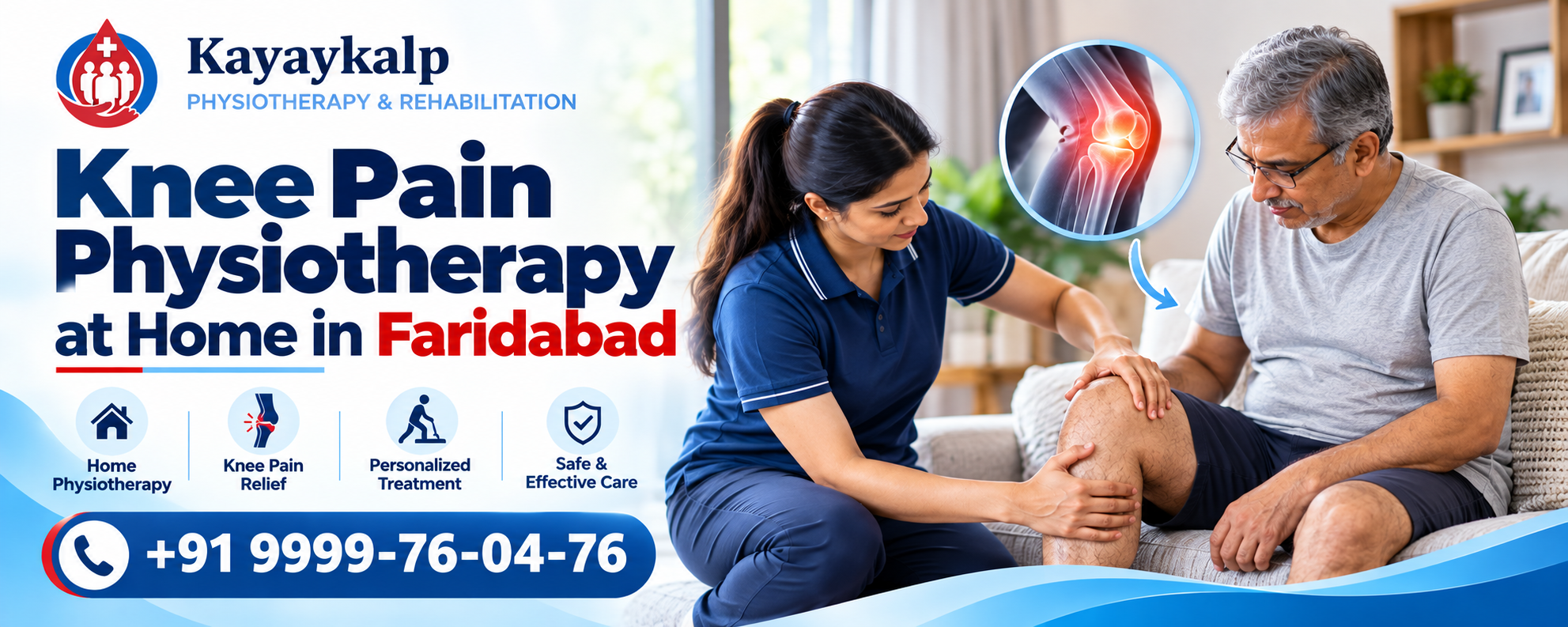
Climbing the stairs of your flat, sitting cross-legged at a family puja, or simply getting up from the sofa: for many people in Faridabad, these everyday moments now come with a sharp or aching knee. If that sounds familiar, you do not have to put up with it. Knee pain physiotherapy at home in Faridabad brings a certified physiotherapist to your doorstep, so you can treat the cause of the pain instead of only hiding it, without queues, traffic or a painful journey.
At Kayaykalp Physiotherapy, we have treated 6000+ patients across Delhi NCR in over 5 years. This guide explains why knee pain happens, how our knee pain treatment works at home, what to expect from the sessions, and when you should see a doctor first.
Knee Pain Treatment in Faridabad: Why More People Choose Home Physiotherapy
Knee pain does not belong only to the elderly. Long hours at a desk, daily commutes between Faridabad and Delhi, stairs in multi-storey societies and builder floors, and a habit of sitting on the floor all put steady load on the knees. Add extra body weight or weak thigh muscles, and the joint starts to complain.
The problem is that a painful knee makes travelling to a clinic the hardest part of treatment. Many people skip sessions, stop early, and the pain returns. With home physiotherapy, treatment happens where you actually live and move, so the plan fits your real life and you are far more likely to complete it.
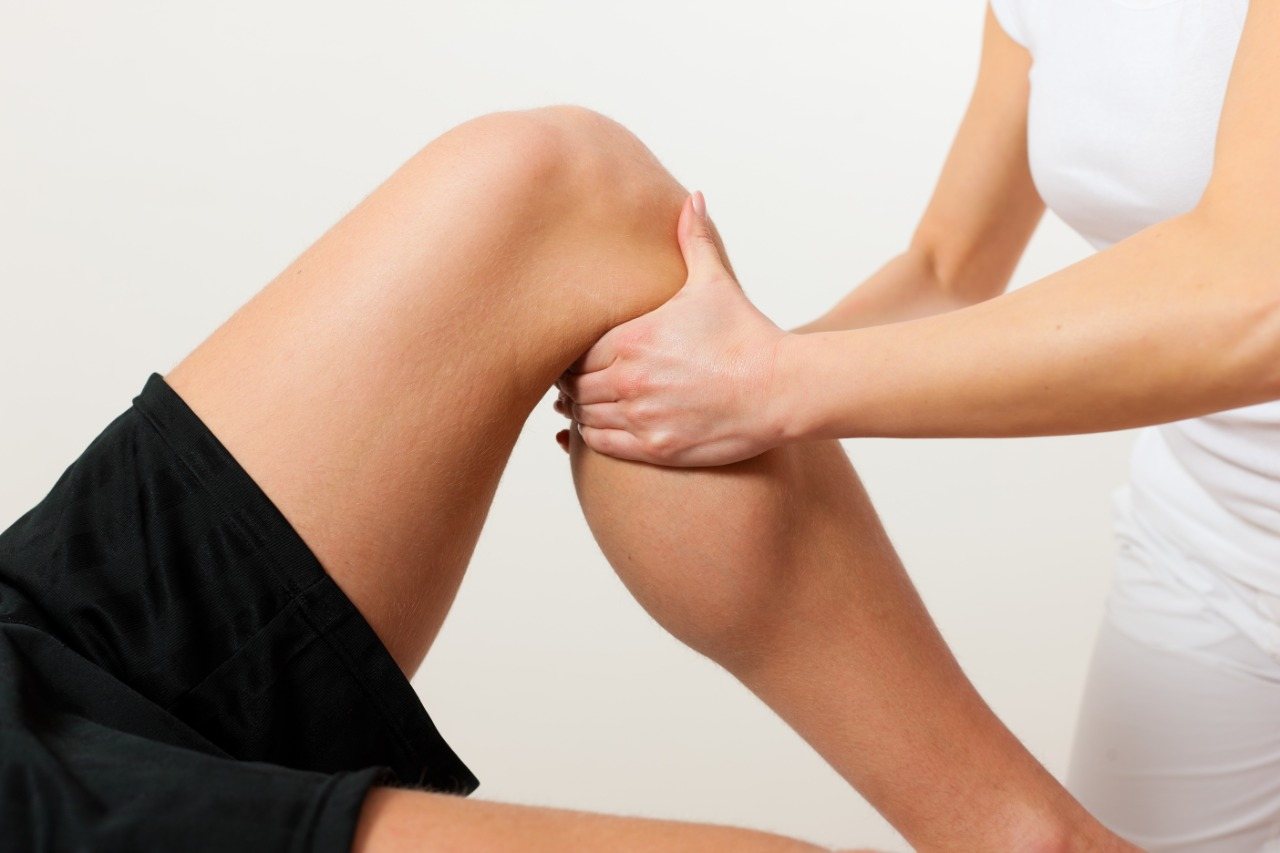
Common Causes of Knee Pain We Treat at Home
Effective knee pain physiotherapy starts with the right diagnosis. Here are the causes our physiotherapists see most often:
Gradual wear of the joint cartilage that brings pain, stiffness and swelling, most often after the age of 40.
Twists, sports injuries or sudden falls can strain the ligaments or the cushioning cartilage inside the knee.
Repeated stairs, long walks or prolonged standing can irritate the tendons around the kneecap.
A dull ache around or behind the kneecap, often worse while climbing stairs, squatting or after sitting for long.
Weak thigh and hip muscles or faulty walking patterns push extra load onto the knee joint.
Stiffness and weakness after a fracture, a plaster or surgery can leave the knee painful until it is rehabilitated.
For a deeper look at the most common joint condition behind long-term knee pain, you can read the NHS overview of osteoarthritis. Our own arthritis management programme focuses on easing stiffness, protecting the joint and keeping you moving.
Signs You Need a Physiotherapist for Knee Pain
Do not wait for the pain to become severe. Book an assessment if you notice any of these:
- Pain while walking, climbing stairs or squatting
- Swelling around the knee joint
- A grinding or clicking feeling when the knee moves
- Stiffness in the morning or after sitting for a long time
- Weakness, or a feeling that the knee may "give way"
- Pain that keeps returning even after rest and painkillers
How Our Physiotherapists Treat Knee Pain at Home
Rather than treating pain in isolation, we look at how you move. Every plan is personal, and it follows five clear steps:
We examine your knee and the joints around it, and look at how you walk, how your hip and ankle move and how balanced your muscles are. This tells us the real cause of the pain.
Gentle, suitable techniques are used first to settle pain and swelling so that your knee can start moving comfortably.
Step-by-step exercises build the quadriceps, hamstrings and hip muscles that protect the knee during stairs, walking and standing up.
Small corrections to the way you walk, climb and get up take unnecessary pressure off the joint.
Once the knee is stronger, we plan a safe return to your daily routine, morning walks, prayers on the floor, family functions or sport.

Your physiotherapist also teaches you a short home programme to practise between visits, which is a key part of knee pain physiotherapy at home. Practised correctly, these small daily efforts are what turn short-term relief into long-term recovery.
Home Physiotherapy vs Clinic Visits for Knee Pain
Both have a place, but for knee pain physiotherapy the difference in convenience is large when the joint is stiff and sore. Here is an honest comparison:
| Factor | Home Physiotherapy | Clinic Visit |
|---|---|---|
| Travel | None, therapist comes to you | Daily commute and parking |
| Comfort for elders | Treated in familiar surroundings | Stairs, waiting and travel add strain |
| Real-life guidance | Advice on your own stairs, bed and bathroom | General advice only |
| Family involvement | Family can learn and support exercises | Limited |
| Consistency | Easier to attend every session | Sessions are often missed |
| Large machines | Portable techniques and exercise-based care | Bigger equipment available |
Knee Replacement and Arthritis Rehab at Home in Faridabad
Rehabilitation matters just as much around surgery as it does for everyday knee pain. Our joint replacement physiotherapy covers both stages:
- Before surgery (pre-habilitation): strengthening the muscles and improving movement so that you go into the operation stronger.
- After surgery: gradual restoration of bending, straightening, walking and balance, with careful progress so the new joint is protected.
Patients with long-standing arthritis also benefit from a structured exercise plan that keeps the joint supple and the muscles strong, which can make daily life easier even when the joint changes cannot be reversed.

Simple Knee Care Tips You Can Start Today
While you wait for your first visit, these everyday habits can protect your knees. Check with your physiotherapist before starting any new exercise.
- Keep moving gently with short, flat walks
- Strengthen the thigh muscles with guided exercises
- Maintain a healthy weight to lighten the load on your knees
- Wear supportive, cushioned footwear
- Use a chair instead of the floor when your knee hurts
- Hold the handrail on stairs
- Deep squats and sudden twisting movements
- Sitting cross-legged or on the floor for long periods
- Climbing stairs repeatedly when the knee is swollen
- Ignoring swelling or a locking knee
- Taking painkillers for months without medical advice
- High heels and worn-out slippers
Do You Need Surgery for Knee Pain?
Not always. Many people with early osteoarthritis, overuse pain or muscle weakness improve with physiotherapy, which means knee pain treatment without surgery is a realistic goal for them. Surgery is usually considered when there is severe joint damage, a major structural tear, or when pain remains disabling despite proper rehabilitation.
Our physiotherapists will always tell you honestly if your knee needs an orthopaedic opinion, and they can work alongside your doctor throughout.
Sessions, Duration and Cost of Knee Physiotherapy at Home
Most knee pain physiotherapy programmes involve 8 to 14 sessions of about 45 minutes each. Mild overuse pain may settle sooner, while long-standing arthritis or post-surgical stiffness may need more time. Charges depend on your condition and the number of visits required, so the simplest way to get a clear answer is to speak to us. Call or WhatsApp +91 9999-76-04-76 and we will guide you before you book.
Areas We Serve: Faridabad and Delhi NCR
Our physiotherapists visit homes in Faridabad, Badarpur, Jaitpur, Molarband, Tajpur Pahari, Mithapur, Ashoka Enclave, Ismailpur and Surya Nagar, along with nearby parts of Delhi NCR. You can read about our local visits in our guide to home physiotherapy in Molarband, Tajpur Pahari and Mithapur. Suffering from back or leg pain along with your knee? See our article on sciatica treatment in Faridabad, and explore our other services for ankle sprain and frozen shoulder.

Why Choose Kayaykalp for Home Physiotherapy
- Certified, experienced physiotherapists with years of hands-on clinical work
- Personalised, evidence-based plans built around your knee, goals and pace
- 100% home visits with flexible scheduling that suits your routine
- Compassionate care for every age, from working adults to senior citizens
- 5+ years of experience and 6000+ patients treated across Delhi NCR
Learn more about our team on the About Us page, or read more frequently asked questions.
Frequently Asked Questions About Knee Pain Physiotherapy in Faridabad
This article is for general information only and does not replace medical advice. Please consult a qualified doctor or physiotherapist about your specific condition.