
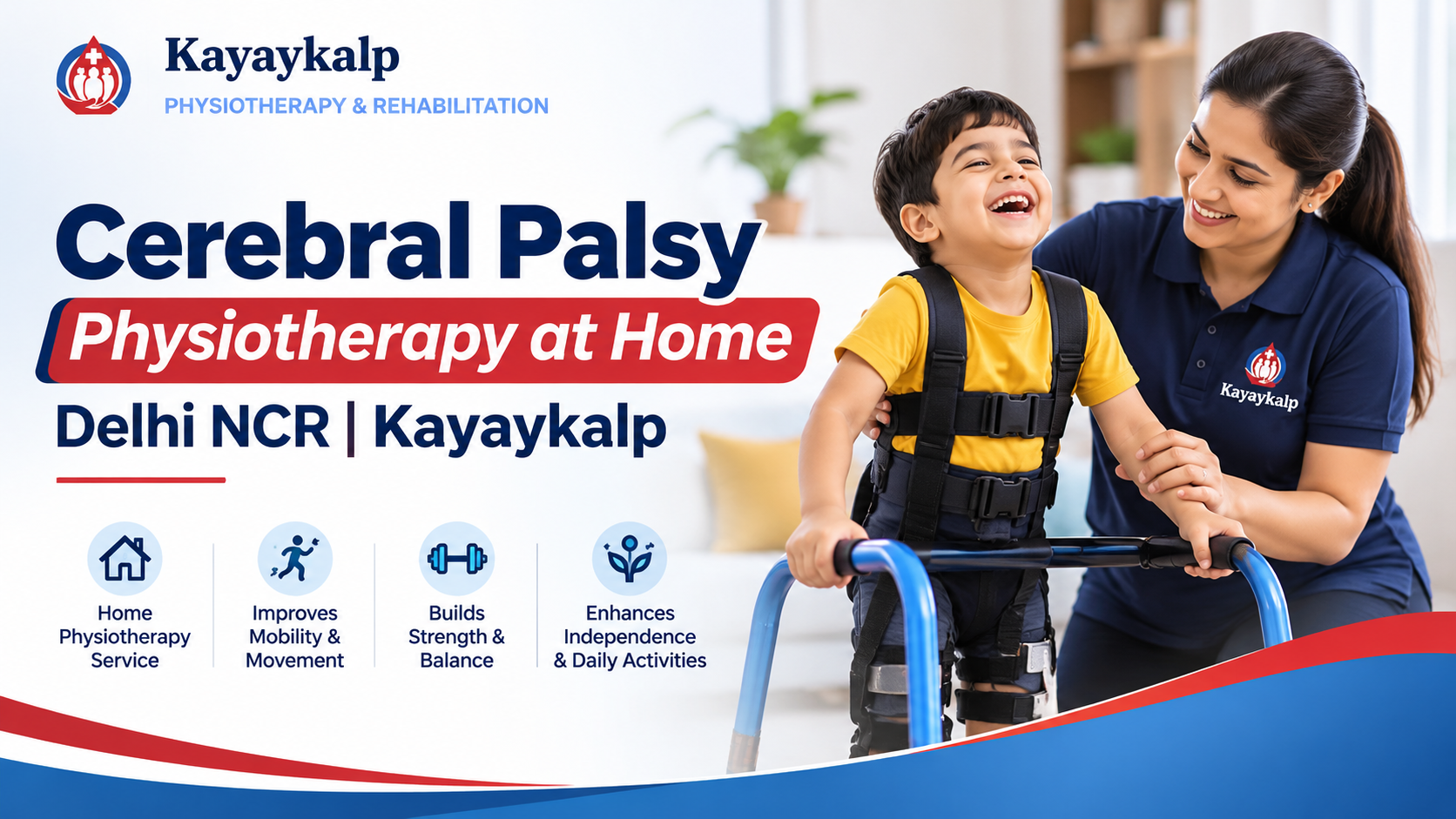
Cerebral Palsy Physiotherapy for Children at Home in Delhi NCR
If your child has cerebral palsy, you already know how much effort goes into every small milestone. Travelling to a clinic with a child who has stiff muscles, poor balance or limited mobility exhausts the whole family. That is why cerebral palsy physiotherapy at home is now the first choice for parents in Tajpur Pahari, Mohan Baba Nagar, Molar Band Extension, Mithapur, Badarpur and across Delhi NCR. At Kayaykalp, certified physiotherapists bring structured, child-friendly therapy to your doorstep and teach you how to continue it every day.
Quick Answer: What is cerebral palsy physiotherapy at home?
It is a personalised, therapist-led programme delivered in your child's own living space. It works on muscle tone, strength, balance, posture, sitting, standing and walking skills, while training parents to carry exercises into daily routines. It does not cure cerebral palsy, but starting early helps children move more easily and build independence.
In This Guide
1. What Is Cerebral Palsy? 2. Early Signs Parents Should Not Ignore 3. Why Home Physiotherapy Works 4. How Our Home Programme Works 5. Techniques Used in Therapy 6. Home Tips for Parents 7. Service Areas: Molarband, Badarpur, Mithapur and Delhi NCR 8. Home vs Clinic Therapy 9. How to Choose the Right Physiotherapist 10. FAQsWhat Is Cerebral Palsy?
Cerebral palsy (CP) is a group of neurological conditions caused by damage to, or abnormal development of, the growing brain, usually before, during or shortly after birth. It affects movement, muscle tone, posture and coordination. The brain injury itself does not worsen over time, but the way CP shows up changes as a child grows, which is why a therapy plan must be reviewed regularly. Every child is different: one may walk with a slight limp, while another needs support to sit.
Spastic CP
The most common type. Muscles feel stiff and tight, making movement slow and difficult.
Dyskinetic CP
Involuntary, uncontrolled movements, which make posture and hand control hard to maintain.
Ataxic CP
Affects balance and coordination, so movements look shaky and walking is unsteady.
Mixed CP
A combination of features from more than one type, needing a carefully blended plan.
Parents Often Ask: Is cerebral palsy curable?
No, there is currently no cure for cerebral palsy. But physiotherapy, started early and practised consistently, can improve movement, comfort and independence. That is the goal of every cerebral palsy physiotherapy programme we build.
Early Signs Parents Should Not Ignore
Only a paediatrician or paediatric neurologist can diagnose CP, but parents are usually the first to notice that something feels different. Watch for these signs and speak to your doctor early:
- Delay in rolling, sitting, crawling, standing or walking compared with other children of the same age.
- Muscles that feel unusually stiff or unusually floppy.
- Poor head control, or using one side of the body far more than the other.
- Walking on toes, an uneven gait or frequent loss of balance.
- Tremors or sudden, involuntary movements.
- Difficulty with feeding, swallowing or excessive drooling.
If your child has already been diagnosed, the next question is how to begin therapy without adding stress to your routine. This is where cerebral palsy physiotherapy at home makes the biggest difference, and why so many parents now look for home physiotherapy for cerebral palsy children.
Why Cerebral Palsy Physiotherapy at Home Works So Well
Children learn movement best in places where they feel safe. Cerebral palsy physiotherapy at home removes the stress of travel, waiting rooms and unfamiliar surroundings, so your child stays calm, cooperative and ready to practise.
Comfort and Calm
No long commute through Delhi traffic. A relaxed child participates better and tires less.
Real-Life Training
We train sitting, transfers, standing and walking on the very floors, beds and steps your child uses daily.
Parent Involvement
You watch every session and learn correct handling and positioning from the therapist directly.
Consistency
Fewer missed sessions because of illness, weather or travel means steadier progress.
Family Support
Siblings and grandparents can learn to help, making therapy part of normal family life.
Flexible Timing
Sessions are planned around school, naps, meals and your schedule, not the other way round.
Researchers in India have studied adding parent-supervised, home-centred activity-based therapy to regular physiotherapy for children with spastic diplegic CP, and a review in Indian Pediatrics discusses the role of home-based care and a family-centred approach in rehabilitation. At the same time, one Indian study on physiotherapy service use found that only around 14 percent of children with CP received physiotherapy at home. In other words, most families are still travelling to institutions, and a quality home option fills a real gap.
How Our Cerebral Palsy Home Physiotherapy Programme Works
Our cerebral palsy physiotherapy at home programme follows a clear, step-by-step pathway, so you always know what is happening and why.
Book a Visit
Call, WhatsApp or fill our contact form. We schedule a home visit at a time that suits your family.
Detailed Home Assessment
Your physiotherapist checks posture, muscle tone, joint movement, balance and motor skills, and reviews your child's medical reports and prescriptions.
Goal Setting With You
Together we choose realistic goals, such as sitting without support, standing with a walker or using a hand more effectively.
Guided Therapy Sessions
Structured, play-based sessions that become gradually more challenging as your child gains strength and control.
Parent Training and Review
You receive a simple home programme, and we review progress regularly and adjust the plan as your child grows.
Techniques Used in Cerebral Palsy Physiotherapy
There is no single exercise that suits every child. Your therapist combines several evidence-based approaches, always matched to your child's age, type of CP and goals:
Stretching and Range of Motion
Gentle, controlled stretching reduces stiffness and helps prevent muscle tightness and joint problems.
Strengthening
Targeted work for the core, hips and legs builds the base needed for sitting, standing and walking.
Balance and Posture
Activities that improve trunk control, steadiness and the ability to react without falling.
Gait and Walking Training
Step-by-step practice for standing, weight-shifting and walking, with or without support.
Positioning and Handling
Correct ways to carry, seat and position your child so daily care supports development.
Task-Based Play
Reaching, grasping, crawling and playing games that turn practice into fun and build functional skills.
Where needed, your therapist will also guide you on splints, orthotics, walkers or other mobility aids, and will advise when to involve an occupational therapist, speech therapist or paediatric neurologist. Physiotherapy works best as part of a team.
Simple Home Tips for Parents
Cerebral palsy physiotherapy at home works best when practice continues between visits. These general habits help most families, but always follow the exact home programme given by your physiotherapist:
- Keep it playful. Use toys, songs and games, so exercises feel like play and not a chore.
- Short and frequent beats long and tiring. Several brief practice periods a day usually work better than one exhausting session.
- Change positions often. Supported sitting, floor time and supported standing during the day prevent stiffness from long periods in one posture.
- Use daily routines. Dressing, bathing and mealtimes are natural chances to practise reaching, sitting balance and transfers.
- Record progress. Short videos and a simple notebook help your therapist adjust goals.
- Celebrate small wins. Confidence matters as much as strength.
Safety First
Never force a stiff limb. Stop and call your doctor if your child shows pain, distress, breathing difficulty or a seizure during or after activity.
Cerebral Palsy Physiotherapy in Molarband, Tajpur Pahari, Mithapur, Badarpur and Delhi NCR
Searching for cerebral palsy physiotherapy near me in South-East Delhi usually leads to large centres that are far away and crowded. Kayaykalp is based at Tajpur Pahari, Molar Band Extension, so families in Badarpur and nearby colonies get fast, regular cerebral palsy physiotherapy at home without long travel. We also serve many other parts of Delhi NCR.
Our Address and Contact
Plot No-1 Unity Hospital, Tajpur Pahari, Mohan Baba Nagar, Molar Band Extension, Mithapur, Badarpur, Delhi 110044.
Phone: +91 9999-76-04-76 | Email: kayaykalp@gmail.com | WhatsApp us
Learn more about our team on the About Us page, or read our guide to the best physiotherapist in Delhi to understand how we work across South Delhi and Delhi NCR.
Home Therapy vs Clinic Therapy for Cerebral Palsy
Cerebral palsy physiotherapy at home and centre-based therapy both have a place. Here is an honest comparison to help you decide:
| Factor | At Home | At a Clinic or Centre |
|---|---|---|
| Travel | None. The therapist comes to you. | Daily or weekly travel with a child who may tire easily. |
| Environment | Familiar, calm and real-life. | Unfamiliar, sometimes crowded. |
| Parent learning | Direct, hands-on and in your own space. | Possible, but often limited to observation. |
| Equipment | Portable tools and household items. | Larger specialised equipment may be available. |
| Consistency | High, as fewer sessions are missed. | Can be affected by distance and illness. |
Some children with complex needs benefit from a combination of both. Your physiotherapist will tell you honestly if a centre visit or additional specialist would help.
How to Choose the Right Cerebral Palsy Physiotherapist at Home
Not every physiotherapist offering cerebral palsy physiotherapy at home has experience with children. Before you commit, ask these questions:
- Is the physiotherapist qualified, certified and experienced in paediatric or neuro-rehabilitation?
- Will there be a full assessment and written goals before therapy begins?
- Will parents be trained, and will a home exercise plan be provided?
- How often will progress be reviewed and the plan updated?
- Will the therapist coordinate with your child's doctor and other therapists?
Cost and Frequency
The cost of cerebral palsy physiotherapy at home depends on your child's severity, how many sessions are needed each week, the length of the programme and your location. Many programmes start with several sessions a week and reduce as your child progresses. The best way to get an accurate quote is a short assessment, so contact our team or call us directly.
Other Conditions We Treat at Home
Kayaykalp also provides home physiotherapy for family members of all ages. Explore our full list of services, including Cerebral Palsy, Parkinson's Disease, Sciatica, Frozen Shoulder, Knee Pain, Arthritis Management, Ankle Sprain and Joint Replacement rehabilitation.
Frequently Asked Questions About Cerebral Palsy Physiotherapy at Home
What is cerebral palsy physiotherapy at home?
It is a personalised, therapist-led programme delivered in your child's own home. The physiotherapist assesses muscle tone, posture, balance and motor skills, sets goals with the family, delivers guided sessions and teaches parents exercises to continue between visits.
At what age should physiotherapy start for a child with cerebral palsy?
As early as possible. If your child shows delayed milestones, stiff or floppy muscles or unusual movement patterns, get a medical assessment and begin physiotherapy as soon as your doctor advises, because early intervention supports motor development.
Can physiotherapy cure cerebral palsy?
No. There is currently no cure for cerebral palsy. Regular physiotherapy can, however, improve strength, flexibility, balance, posture and mobility, helping many children become more independent in daily activities.
Can a child with cerebral palsy learn to walk?
Many children with cerebral palsy can walk, with or without mobility aids, but this depends on the type and severity of the condition. A physiotherapist will set realistic, stage-by-stage goals after assessing your child.
How many physiotherapy sessions does a child with cerebral palsy need?
It varies with your child's age, severity, goals and response to therapy. Many programmes begin with several sessions a week plus daily home practice, and the plan is reviewed regularly as your child grows.
Is home physiotherapy as effective as clinic physiotherapy for cerebral palsy?
Many families find home therapy effective because the child is relaxed, the parents are directly involved and sessions are not missed due to travel. Research on home-based programmes varies in design, so every plan is individualised, and some children may benefit from a mix of home and centre-based care.
Do you provide cerebral palsy physiotherapy in Molarband, Badarpur, Mithapur and Tajpur Pahari?
Yes. Kayaykalp is based near Molar Band Extension, Badarpur and provides home visits in Tajpur Pahari, Mohan Baba Nagar, Mithapur, Badarpur and across Delhi NCR including Faridabad, Okhla, Kalkaji and Lajpat Nagar. Call +91 9999-76-04-76 to confirm availability for your area.
What should I keep ready for the first home visit?
Keep your child's medical reports, prescriptions and any MRI or EEG reports handy, along with a list of your concerns. Arrange a clear floor space, a mat or bed and comfortable clothing for your child.
More answers are available on our FAQs page, and you can browse more articles on the Kayaykalp blog.
Give Your Child the Best Start with Home Physiotherapy
Every child with cerebral palsy deserves patient, expert and consistent care. Book cerebral palsy physiotherapy at home with Kayaykalp and take the first step towards better movement, stronger posture and greater independence for your child.
Disclaimer: This article is for general education and does not replace advice from your child's doctor. Diagnosis and medical decisions should always be made by a qualified paediatrician or neurologist.